Showing posts with label Rachel Carson. Show all posts

2/3/17

SUPERFUND 'Silent Spring' comes to life in DDT-stricken town, E&E News reporterGreenwire: Gabriel Dunsmith, Thursday, February 2, 2017

6/11/15

The more they dig, the more they find: DDT cleanup continues for mid-Michigan town. http://www.environmentalhealthnews.org/ehs/news/2015/jun/michigan-superfund-ddt-epa-birds-health-pesticide
Federal, state officials are making progress cleaning up harmful chemicals in St. Louis, Michigan, but more work remains and there is still no health study.*
June 11, 2015 By Brian Bienkowski Environmental Health News

ST. LOUIS, Mich. — During recent summers birds were found littered around the town, poisoned with a long-banned pesticide.

This summer? The school athletic grounds, where kids practice football and softball, are being dug up after it was discovered they too are contaminated with DDT.

It is the latest chapter in a seemingly endless effort to rid this small, rural mid-Michigan town of toxic chemicals that have plagued it since the 1960s. And, despite wildlife deaths and some lawns contaminated to levels deemed harmful to humans, no one is conducting health testing on DDT exposure in the community.

Schoolyard contamination
St. Louis, an hour drive north of state capital Lansing, has long dealt with contamination left behind by the Velsicol Chemical Corp., formerly Michigan Chemical, which manufactured pesticides until 1963 and abandoned loads of DDT, which was banned 40 years ago.


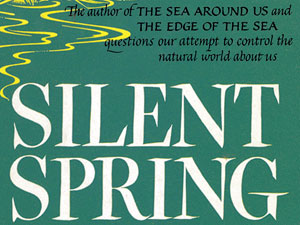
The pesticide was made famous by Rachel Carson’s book Silent Spring, which exposed the hazards of DDT, especially for birds, in 1962. Populations of bald eagles and other birds crashed when DDT thinned their eggs, killing their embryos. Exposure also has been linked to multiple health problems in humans, especially developing babies.

*Read full article

4/29/15


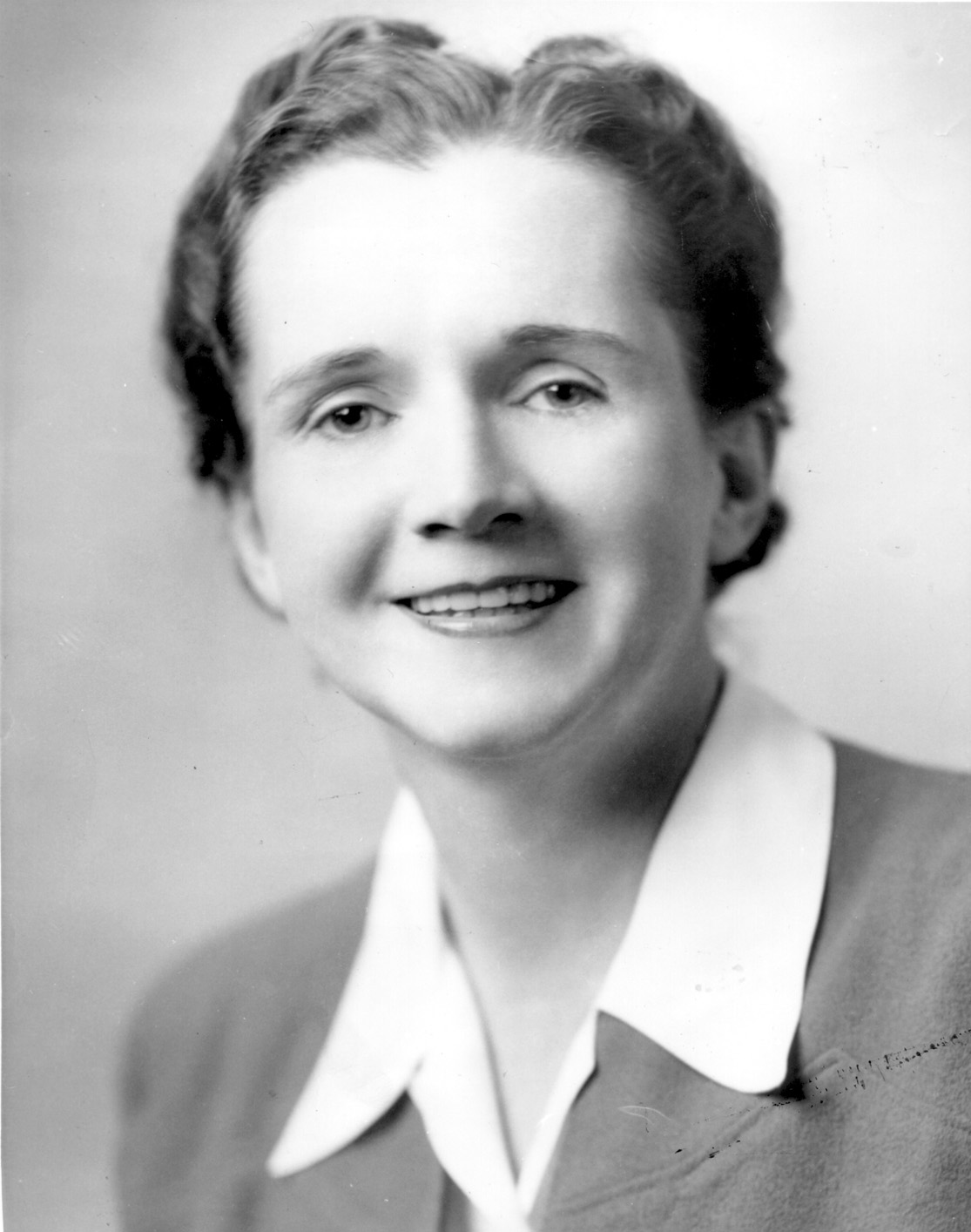
Rachel Carson fws pub domain.jpgRachel Carson is an inspiration. She taught us that our health depends on the quality of our environment. Her extraordinary responsibility and courage wakes up the voice in me that calls for action with a sense of political urgency as pollution and illness threaten the people and places I love. 

We know that, in spite of the truth of her science, Rachel faced a deliberate campaign to discredit her. Today we must be equally resolute in confronting the ongoing attempts to bamboozle us with slick ads for natural gas, pink ribbons on carcinogenic products, or meaningless labels with false claims of safe and natural. 

We can not afford to be indifferent or passive. Rachel’s example calls us all to stand up, sign up, speak up, and team up to conserve our natural resources and to work for clean energy, clean water, clean air and safe food.

We don’t have to think of ourselves as whistle blowers or canaries in the mine, but as guardians, steadfast sentries, the defenders of our community. We can imagine ourselves to be sentinel lions, the universal symbol of protection at the entrances of cities, libraries, schools, bridges...guarding the treasures of community.

Join voices with Green Decade and other advocates such as Clean Water Action, the Conservation Law Foundation, Food and Water Watch, Toxics Action Center, Mass Breast Cancer Coalition, the Union of Concerned Scientists and 350.org. 

Tell your friends and tell our policy makers that we want divestment from fossil fuels and investment in safe renewable energy. We want a meaningful carbon tax. We want to affirm that human beings, not corporations, are persons entitled to constitutional rights. 

We want to preserve the effectiveness of antibiotics, to stop the cruelty of factory farming, to stop fracking, to stop Tar Sands, to eliminate plastic bags, plastic bottles and Styrofoam, and to plug the gas pipeline leaks in our streets. Let’s claim our right to be safe from products and packaging with hormone disrupting plasticizers, useless but carcinogenic flame retardants, herbicides (especially RoundUP), microbeads, and genetically engineered organisms.

May 27 is Rachel Carson’s birthday. On that day, take a moment to remember Rachel, especially her book Silent Spring and its message, “prevention is the imperative.”  Rachel was right. Now the future is up to us​.​

-- Ellie Goldberg, www.healthy-kids.info

We tolerate cancer-causing agents in our environment at our peril…For those in whom cancer is already a hidden or a visible presence, efforts to find cures must of course continue.  But for those not yet touched by the disease and certainly for the generation as yet unborn, prevention is the imperative need.” — Rachel Carson, Silent Spring

2/27/15

Rachel Carson’s warnings about global warming

Rachel Carson was born in 1907 and she died in 1964.  She was one of the first scientists to alert the world to the importance of caring for the environment.  

Larry J. Schweiger, the author of Last Chance:  Preserving Life on Earth, wrote this on the 100th anniversary of Carson’s birth.  He wrote,
“Forever listening to birds and watching the movements of fish, Rachel discovered that they were shifting from their historic ranges all over the world and moving quite strikingly and consistently toward the poles. In her second and wildly successful book published in 1951 entitled, The Sea Around Us, Rachel wrote a chapter entitled: ‘The Global Thermostat’ detailing the many range shifts and glacial changes seen in nature in the preceding decades concluding with, ‘now in our own lifetime we are witnessing a startling alteration of climate…’Because Rachel was listening, she was able to faithfully record fish and bird migratory changes and melting glaciers and rightfully associated them with a warming climate.
Read whole article: Doug Craig, Climate of Change
http://dcraig.blogs.redding.com/2015/02/rachel-carsons-warnings-about-global-warming/ 

1/16/15

The Power of One Voice

A 50-Year Perspective on the Life of Rachel Carson is a groundbreaking documentary examining the life of Rachel Carson and the profound implications of her environmental work. Perfect for classrooms and community events, this 51-minute film features interviews with Rachel Carson’s adopted son, Roger Christie, her biographer, Linda Lear, and other notable writers, scientists and advocates. By highlighting the power of Carson’s voice, we hope to inspire others to add their voices to this essential conversation. ~Mark Dixon (Director/Producer) and Patricia DeMarco (Executive Producer)
http://powerofonevoicefilm.com/

Premiere in ‪#‎Pittsburgh‬! January 29, 2015, at 7:00 P.M. at the National Aviary! 
 
Remarks by Ellie Goldberg, May 2007: The Legacy of Rachel Carson (May 27, 1907 – April 14, 1964)   VIDEO (2:50 min)


5/26/14


FOR IMMEDIATE RELEASE

Keeping Rachel Carson's Legacy Alive
Contacts:
May 27, 2014. Green Decade Newton is joined by the City of Newton in recognizing Rachel Carson, a ​​scientist and celebrated author​, for her outstanding, dedicated and selfless service to nature, our environment and public health.

Carson’s 1962 book, Silent Spring, alerted the world to the hazards of pesticides and ​inspired ​the creation of the U.S. EPA, the U.S. ban on DDT,  the Clean Water Act and the Clean Air Act.  2014 is the 50th anniversary of Carson's death from breast cancer ​April 14, 1964.

Green Decade Newton’s Committee for Alternatives to Pesticides (GreenCAP) promotes the annual recognition of Rachel Carson’s legacy on her birthday, May 27. 

GreenCAP was organized by a group of concerned Green Decade members in 1994 after Dr. Rita Arditti's presentation about cancer as an environmental disease.​ ​

Dr. ​Arditti, a biologist, educator and activist, was a co-founder of the Women’s Community Cancer Project in 1989. Their slogan was “Rachel Carson Was Right.”  (Dr. Arditti died of breast cancer on Christmas Day, 2009.)

At a Carson ​C​entennial event at Newton Free Library in 2007, Dr. Arditti emphasized Carson’s message “Prevention is the Imperative” and that Silent Spring is as current today as it was in 1962.

Green Decade Newton’s programs are designed to provide education and empower citizens to take personal and civic action​ for energy efficiency, pollution prevention, and conservation of vital resources.

For more information visit the Green Decade table at Newton’s Farmer’s Market and go to greendecade.org. Find resources such as Pest Control the Old Way the BEST Way (pdf) and Spring Safety Tips (pdf).
Inline image 2
(May 27, 1907 – April 14,1964) 

  Inline image 1
​
Commonwealth of Massachusetts ​City of Newton

May 27, 2014.  The City of Newton proudly awards this Certificate of Commendation in honor of Rachel Carson in recognition of her outstanding, dedicated and selfless service to nature, our environment and public health.  Rachel Carson taught us that our health is intimately connected to the heath of our environment, and that safeguarding our ecosystem protects our health and the environmental resources on which all life depends. City of Newton is proud to join Green Decade in honoring the legacy of Rachel Carson.

​​

4/2/14

Remembering Rachel Carson who died fifty years ago, April 14, 1964.  In her book Silent Spring (1962) she wrote, "It would be unrealistic to suppose that all chemical carcinogens can or will be eliminated from the modern world. But a very large proportion are by no means necessities of life. By their elimination the total load of carcinogens would be enormously lightened, and the threat that one in every four will develop cancer would at least be greatly mitigated. The most determined effort should be made to eliminate those carcinogens that now contaminate our food, our water supplies, and our atmosphere, because these provide the most dangerous type of contact -- minute exposures, repeated over and over throughout the years.

... For those in whom cancer is already a hidden or a visible presence, efforts to find cures must of course continue. But for those not yet touched by the disease and certainly for the generations as yet unborn, prevention is the imperative need. (Silent Spring, Chapter 14, One in Four)


www.rachelcarson.org
Life of Rachel Carson, founder of contemporary environmental movement, author of Silent Spring, advocate of nature and environmental ethics, against the misuse of chemical pesticides,breast cancer survivor and best selling nature writer, marine biologist and literary celebrity.

5/13/13

National Audubon Society Celebrates 10th Anniversary Rachel Carson Awards 


The National Audubon Society will celebrate their 10th AnniversaryWomen in Conservation Luncheon by presenting the 2013 Rachel Carson Award to two exceptional women at The Plaza Hotel in New York City on Wednesday, May 29. The prestigious award, launched in 2004, recognizes visionary women whose dedication, talent and energy have greatly advanced environmental and conservation causes locally, nationally and globally.

http://www.audubon.org/sites/default/files/documents/wic_general_press_release_final.pdf
 

Keynote is historian Douglas Brinkley, who will speak about the legacy of Rachel Carson and women like Marian Heiskell and Lady Bird Johnson who will leave ever-lasting impacts on our country. An excerpt from his new book Silent Spring Revolution: John F. Kennedy, Rachel Carson, Stewart Udall and the Environmental Movement, 1961 to 1964, appeared in Audubon magazine, the same publication that dared print an excerpt of Carson’s Silent Spring, the iconic, bestselling book published 50 years ago.

http://www.audubonmagazine.org/articles/conservation/rachel-carson-and-jfk-environmental-tag-team

2/19/13

Rachel Carson Sense of Wonder Contest

The 7th Annual Rachel Carson Intergenerational Sense of Wonder Contest
We are pleased to announce the 7th Annual Sense of Wonder Contest. Songwriting has been added to the categories of artistic expression. There is also a new sponsor: the Legacy Project, who joins our long-time sponsors of the contest. The deadline for entries is Monday, June 10, 2013.

http://www.epa.gov/aging/resources/thesenseofwonder/index.htm

2/18/13


It has been more than 50 years since Rachel Carson published her groundbreaking book "Silent Spring". Derided by scientists at the time, she is now regarded as a hero by environmental progressives and a villain by many others, but Carson certainly changed how the public views environmentalism.


One area of Carson's career that is often overlooked is her time as a government employee. This is where she got her true start in journalism and it is the area G. Pascal Zachary, professor of practice with the Consortium for Science, Policy and Outcomes at Arizona State University, will be discussing at the 2013 American Association for the Advancement of Science (AAAS) annual meeting in Boston. Zachary is part of the panel, A 50 Year Legacy: Why does Rachel Carson Matter?


Zachary, who co-organized the panel along with ASU professor Jane Maienschein, gave his talk, "Back to the Future: The Rachel Carson 'Model' as a Response to the Crisis in Science Journalism," today (Feb. 17).

"At a time when popular writers wanted to write about serious subjects and devote themselves to learning, there was little support for them commercially," Zachary said on Carson and her early career. "I'm intrigued about how her career suggests a way forward for government to support serious writing and journalism about science and the environment."


Carson served as an information officer with the U.S. Bureau of Fisheries and the Fish and Wildlife Service for nearly two decades before becoming an independent writer. During that time, she reported on news and findings from the agency.


Zachary believes Carson's experience and work in this field is what shaped her later writings. Additionally, he saw her early government work as an opportunity. With publications such as the New York Times recently disposing of their environmental desk, Zachary thinks the format of having government employees writing about science could be the way of the future.


"I'm trying to see Rachel Carson in both a historical sense and prefiguring and anticipating a movement that will reform or revolutionize science journalism today," Zachary said.


"When I talk about her as a model for the crisis in science journalism, what I mean is currently there is less and less quality science journalism," he added. "As a community, we have to figure out how to draw the line and get a minimal amount of quality science journalism."

12/23/12

Today’s Rachel Carson

Today’s Rachel Carson is a woman I know, admire and love, Dr. Beverly Paigen. I was reminded of how important Dr. Paigen is when asked to present her with an award from the Maine Environmental Health Strategies Center.

When I began to think about what I would say about Dr. Paigen I realized how groundbreaking her research was back in 1978 at Love Canal. How when she presented her theories and her research findings around the Love Canal chemicals and adverse health problems she was dismissed, ridiculed, and harassed by those who wanted to silence her, just like Rachel Carson.

Beverly demonstrated how the chemicals had likely moved out of the dumpsite the Love Canal and into the homes that surrounded the site. Again she was dismissed. Today, there is a name for this movement of chemicals called vapor intrusion and there is even an EPA approved technology to remove the chemicals from homes called vapor intrusion mitigation technologies.

...

Read the whole article: http://chej.org/2012/12/today%E2%80%99s-rachel-carson/

12/21/12

The Fracking of Rachel Carson

Silent Spring in an Age of Environmental Crisis

Wednesday, March 6, 2013 · 4 PM - 5 PM

Korenman Lecture, Humanities Forum, Social Sciences Forum

A cancer survivor, Dr. Sandra Steingraber has written extensively on the intersection of the environment and public health. She will discuss what we have learned, and failed to learn, in the 50 years since Rachel Carson’s publication of Silent Spring, and will examine the threat to public health that fracking poses.

Sandra Steingraber’s highly acclaimed book, Living Downstream: An Ecologist’s Personal Investigation of Cancer and the Environment presents cancer as a human rights issue. Originally published in 1997, it was the first to bring together data on toxic releases with data from U.S. cancer registries and won praise from international media including The Washington Post, Publishers Weekly, The Lancet, and The London Times.

Sponsored by the Department of Gender and Women Studies with support from the Department of American Studies, the College of Arts, Humanities and Social Sciences, the Dresher Center for the Humanities, Geography and Environmental Systems, Office of the Provost, Social Sciences Forum, and Women in Science and Engineering

12/13/12


PEACE IN NATURE: Aylee Tudek, 16, Shares Her Sense of Wonder, 12/10/12

“If I had influence with the good fairy who is supposed to preside over the christening of all children I should ask that her gift to each child in the world be a sense of wonder so indestructible that it would last throughout life, as an unfailing antidote against the boredom and disenchantments of later years, the sterile preoccupation with things artificial, the alienation from the sources of our strength.”
― Rachel Carson, ‘The Sense of Wonder’


The sun was surely burning my back; at least it felt like it. I had on my new bikini top with a halter-top over it. Yesterday had been the hottest day yet this year. The grass was finally a healthy green and the dandelions were blooming. The land had come alive with insects swarming over the grass in a cacophony of inaudible background noise. Fairy-pink apple blossoms filtered down through the branches and slanted into the grass, scenting the air. The heavy humidity amplified the scent of rotting fruit issuing from the chicken coop behind me. The smell coming in pungent waves broken up by the recurring sweet odor of the apple blossoms.
Everything was such a bright shade in the sun. Being used to the gray monotony of school and the inside of cars caused nature to appear unnatural. It was a horrifying realization.
I looked more intently at my surroundings. In front of me were the beehives, two of them, a creamy yellow color. Bees spilled out of the open slat in the front, crawling over each other in a gentle frenzy. They whizzed past my head like little torpedoes, missing me each time. The ones coming back from the fields were laden with pollen, appearing to have yellow saddlebags on their back legs.

Read the complete essay at LINK

Aylee Tudek is a 16-year old student at Mt. Abraham Union High School in Bristol, VT. She writes: “Inspired by ‘Last Child in the Woods’ and participating in a composition writing class, I wrote this piece depicting watching the bee hives on my farm." She was "moved to share it with those who may not yet have had the chance to find peace in nature.” 

12/9/12

How did 'Silent Spring' shape America? | Minnesota Public Radio ... December 10, 2012

Historians have said that the beginning of the American environmental movement can be traced back to the date, 50 years ago, when Rachel Carson's "Silent Spring" was published. The work shocked the public, led to the passage of the Clean Water Act and the founding of the Environmental Protection Agency. 

William Souder, author of "On a Farther Shore: The Life and Legacy of Rachel Carson," will join The Daily Circuit Monday, Dec. 10 to talk about Carson's landmark book. 

"I think the message of 'Silent Spring' does still resonate," he said on The Diane Rehm Show earlier this year. "I think people are more sensitive now to the idea that we can contaminate the environment with chemicals. When Carson wrote 'Silent Spring' this was really not an idea that had occurred to people before. And that was one of the reasons that she drew such an explicit link between chemical contamination and the contamination that was then happening from nuclear testing around the world." 

Linda Lear, author of "Rachel Carson: Witness for Nature," will also join the discussion. 

This is the fourth and final look at one of the 88 titles on the Library of Congress' list of books that shaped America. We picked "Silent Spring" after listener requests. 

READ MORE ABOUT "SILENT SPRING:"
How 'Silent Spring' ignited the environmental movement (New York Times)
Rachel Carson's lessons, 50 years after "Silent Spring" (New York Times)
Video: The legacy of "Silent Spring" (CBS News)

minnesota.publicradio.org/.../daily-circuit-rachel-carson-silent-...

12/7/12

OMG I HEART Rachel Carson: Social Media and Environmental Info
Air date: Week of 12/08/2012


What would Rachel Carson tweet? Take shelter from Saturday's rain at the Rachel Carson Homestead in Springdale. The Allegheny Front's Jennifer Szweda Jordan is leading a salon-style discussion on social media and the environmental hero to celebrate the 50th anniversary of Silent Spring. The Homestead will be open from noon to 5. Salon conversations begin at 3. Event is free. Contact jennifer@alleghenyfront.org for more information.


On http://alleghenyfront.org/index.html

12/4/12

Seacoast towns paying tribute to Rachel Carson

Area groups taking year-long look at legacy of 'Silent Spring'
YORK, Maine — A consortium of York and regional environmental groups have banded together to offer a yearlong look at the legacy of scientist and environmental activist Rachel Carson, on the 50th anniversary of her book "Silent Spring."

This Thursday evening, a live video conference will be offered at the York Public Library of a panel discussion being held at the Portland Public Library. Scientists and researchers from throughout the state will explore the impacts and implications of "Silent Spring."

Published in 1962, "Silent Spring" documented the detrimental effects of pesticides on the environment, particularly birds. It has long been credited with launching the modern environmental movement.

Carson lived in Maine during part of her life, and the Rachel Carson National Wildlife Refuge was established in 1966 along the coast between Kittery and Cape Elizabeth.

The recent local focus on Carson began with York Reads, a York group headed by York Public Library Director Robert Waldman, which picks a book each year for the community to read.

Waldman said when they were discussing what book to chose for the 2012-13 year, which begins in the fall, someone mentioned "Silent Spring."

"I said it seems to me if we're going to do that, we have to get the community involved," said Waldman. "Each person got in touch with someone else and before you knew it, we had quite a significant group."

The group now includes the Center for Wildlife, Cornerstones for Science, the Mount Agamenticus Conservation Program, the Rachel Carson National Wildlife Refuge, RiverRun Bookstore, White Pines Program, York Adult Education, York School Department, York Art Association, Greater York Chamber of Commerce, York Energy Efficiency Committee, York Land Trust, the York Rivers Association, and Gateway to Maine: Outside.

Read More: http://www.seacoastonline.com/articles/20121204-NEWS-212040379

Upcoming events

• Dec. 6: Video conference at York Public Library about "Silent Spring." 7-9 p.m., "Silent Spring: 50 Years Later." The panelists will discuss the legacy of the book from scientific, historical and literary approaches. Included will be marine biologists, scientists and oceanographers.

• Dec. 11: Center for Wildlife: "Celebrating Rachel Carson: Exploring unseen connections between wilflife and human health." 6-7:30 p.m.

• Jan 18: Film "Living Downstream," York Public Library

• Feb. 15: Film "The Story of Stuff," York Public Library

• March 8: Film "Mother, Caring for 7 Billion," York Public Library

12/2/12


This year marks the 50 year anniversary for Rachel Carson’s book Silent Spring. The eponymous book that warned of the dangers of pesticides, a book many say prompted the environmental movement, led to the banning of the pesticide DDT a decade later.

What many people don’t realise is that today, 50 years after Silent Spring was published, we are exposed to more toxic chemicals than ever before, an estimated 8,000-12,000 chemicals continue to be introduced annually, with no requirement that human toxicity or exposure data be provided before the chemical is used.

“Like the constant dripping of water that in turn wears away the hardest stone,” she wrote in her 1962 book, “this birth-to-death contact with dangerous chemicals may in the end prove disastrous.”

Read article: http://www.poisonedpets.com/cats-and-dogs-sentinels-in-the-silent-spring/

11/30/12


Maine Voices: Maine needs leaders in Washington to support the Safe Chemicals Act

An outdated federal law should be modernized for the safety of people here and all over the nation. By LISA POHLMANN 

AUGUSTA - Rachel Carson's book "Silent Spring," published 50 years ago in 1962, was the spark that ignited America's environmental movement.

Carson had spent the previous two decades on Southport Island in Maine, researching and writing along the rugged shores she loved.

Her resounding message in "Silent Spring" was that the land, water and all living creatures were in danger from the widespread application of toxic pesticides.

Read more http://www.pressherald.com/opinion/maine-needs-leaders-in-washington-to-support-the-safe-chemicals-act_2012-11-30.html